Signed in as:
filler@godaddy.com
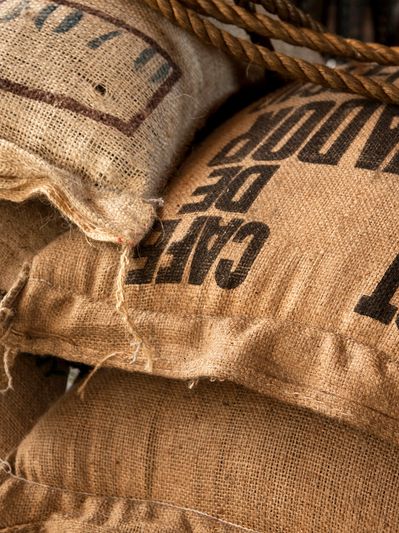
A group buy is a shared purchase where 5–10 people come together to buy a full bag of a single coffee—either green or roasted, and split it into smaller portions.
By purchasing as a group, everyone gains access to unique coffees that might otherwise be hard to source individually. It’s a great way to explore new origins, experiment with home roasting, or stock coffee for an office, shop, or special event, all while sharing the experience with fellow coffee enthusiasts.
Participants can choose green coffee for roasting at home or roasted portions ready to brew, making group buys flexible, affordable, and community-driven. At its core, it’s about discovery, collaboration, and sharing great coffee together, from origin to cup.
How Our Group Buy Works
Each group buy is centered around a single coffee lot with a set minimum number of purchasers and a fixed price once that minimum is met. When the group fills, the coffee is secured and prepared for delivery. Participants can choose to receive their share freshly roasted to their preferred roast style, or as green coffee to roast themselves at home.
Group Buy Timing & Fulfillment
Your group buy purchase will be completed within three months of your buy-in, or your payment will be fully refunded. Once 60% of the bag is sold, the full lot is ordered. Green coffee typically arrives at our Lititz location within one week of the order and is ready for pickup roughly 8 days after. If you choose roasted coffee, please allow approximately 14 days from the time the group bag is purchased for roasting, pickup, or shipping.
Group Buy Pricing
When you purchase as part of a group, green coffee pricing can start as low as $8 per pound for local pickup, or $12 per pound roasted. For full details and current availability, please visit our active group buy offerings.
Organic Honduras COMSA - Royal Reserva Natural (GP)
In the year 2000, 62 Honduran coffee farmers joined together with a common goal to transform their farms from conventional to organic production and formed COMSA (Cafe Organico Marcala, S.A). In 2001, fostered by a foundation called Funder, COMSA earned their organic certification from Bio Latina which has enabled them to market their coffee to more international buyers and realize better selling prices for their coffee.
In February 2006, COMSA then applied for and was granted Fair Trade certification status. COMSA uses the Fair Trade price premium to fund many social projects including paying teachers’ salaries and purchasing school supplies. The premium also finances the construction of kitchens in the schools in support of the Merienda Escolar program that provides meals for school children.
Sourced From
Honduras
Elevation
1220 to 1524 meters
Varietals
Bourbon, Catuai, Caturra, Typica
Process
Natural, Raised Beds
Harvest
December - April
Sold in 25 lbs lots
ONLY 3 lots available
Includes Shipping to the continental 48 states
Roasted Your Way, Built for Volume.
Our 25-lb Roasted Coffee Box is offered as part of a group buy, making it a great way to access premium coffees at better value. Once your order is placed, we’ll reach out to confirm your preferred roast level and profile, ensuring the coffee is roasted exactly to your needs.
Because this is a group buy, beans may take up to 3 months to ship, depending on how quickly the lot fills—often much sooner when the group comes together quickly. Once the lot is secured, your coffee is freshly roasted to order and shipped in five 5-lb bags for easy handling and consistent freshness.
Coffee most likely first arrived in Honduras in the 18th Century, but at this time, production was very low and limited to small holders producing for local consumption. Honduras lacked the unity and capital required to support large scale plantations that could be found in neighboring countries. Products like tobacco, silver, and hardwood were the primary exports because of their relatively higher prices, but the companies were largely foreign-owned and generated little money for the local economy.
Moving into the 19th century, political turmoil and civil wars drained the country’s resources, and prevented the development of major domestic infrastructure. In 1838, Honduras gained absolute independence from the Central American Federation, but the country was saddled with massive debts.
In the 1870s banana production on the northern coasts was becoming increasingly profitable, and American fruit companies took notice. They began to purchase land at favorable rates in return for developing the local infrastructure. Over time, these agreements became increasingly favorable to the Americans with their bananas becoming exempt from taxes, siphoning money from the central government. With growing American investment in the country, the Unites States government started to increase its presence as well, especially to mediate conflict with Honduras’ neighbors: Nicaragua, Guatemala, and El Salvador.
Eventually, the United States became involved in settling the vast amounts of debt the Honduras government owed. Their resolution was to allow bankers to control the railways in Honduras, while the US controlled the customs revenue. These terms were voted against by the congress of Honduras, and in an effort to find another source of revenue, the President sought to end the tax exemption of foreign banana companies. In response, Samuel Zemurray, owner of Cuyamel Fruit Company, recruited the ex-president of Honduras and hired American mercenaries to overthrow the government and install a military dictatorship loyal to American Fruit interests in 1912. By 1913, Honduras was definitively a “banana republic” with 66% of exports being bananas. Over the next 40 years, Honduras would experience several more contested elections and political turmoil would continue. The banana industry peaked in 1930, but rapidly declined during the great depression.
With the end of WWII, Honduras agricultural industry began to recover, especially the cattle industry because of high demand in the United states for Beef. Land began to be concentrated in the hands of wealthy ranchers who primarily used it for pasture. This encouraged Land reform movements and a new coffee sector began to take shape. During the 1950s USAID and the UN’s National Development Bank worked to support the small farmers to expand coffee production and processing infrastructure.
In 1967 AHPROCAFE was formed, the Association of Honduran Coffee Producers. This would be followed by IHCAFE, the Honduran Coffee Institute, currently in operation. IHCAFE provides training and access to capital for coffee farmers. The domestic programs and investments helped Honduras to capitalize on the high prices of coffee that occurred through the 1970s. In the 1980s, IHCAFE and USAID promoted the replanting of coffee farms to Caturra, Catuai, and Villa Sarchi. From 1950 to 1990, coffee production in Honduras grew 807% and coffeelands grew 129% in area.
In 1998 Hurricane Mitch decimated 70% of Honduras’ agriculture, impacting many coffee farms. Hurricane Mitch’s impacts were amplified by the coffee price crash of 1999. In 2000, the Government of Honduras nationalized IHCAFE and by 2002, it had issued over $20 million in loans to farmers to keep them from abandoning their properties and avoid foreclosure. A majority of the repayments of these loans capitalize the National Coffee Fund that is designed to support the coffee sector. It is responsible for the maintenance and construction of roads along with implementing programs to assist smalls farmers in land title issues, constructing solar dryers, and training in agroforestry and community forestry.
With 61% of Honduras’ coffee farms above 1,200m, it is ideal for growing high quality coffee. In 2004, Honduras began working with Cup of Excellence to showcase its highest quality producers. In 2019, nine producers entered coffees that scored above 90 points. Over the last 20 years Honduras has grown to not only one of the largest producers of coffee, but a producer of some of the highest quality coffee in the region.
The Copan region includes Copan, Ocotepeque, and Parts of Lempira, Cortes and Santa Barbara. The elevation lies between 1,000 and 1,500 meters and mostly produces coffee that is approachable and mild with chocolate tones and a round body.
This region encompasses Santa Barbara, Intibuca and Lempira. The elevation lies between 1,100 and 1,500 meters. Because of this, the coffee has a more delicate acidity with fruitier flavors and a lighter body.
La Paz, Comayagua, Santa Barbara, and Intibuca are withing the Monteciello growing region. The elevation is the highest at 1,200 to 1,600 meters. The coffee produced here is more vibrant with a velvety body.
This region covers parts of Comayagua and Francisco Morazan. It lies between 1,000 and 1,500 meters. Coffees found here are chocolatey with citrus notes and a creamy body.
The Paraiso region is comprised of parts of Choluteca and Olancha and El Paraiso. The elevation ranges from 1,000 to 1,400m. The coffee is sweet and mild with Citrus flavors.
Finally, the Agalta region covers parts of Olancha and Yoro. It rises to 1,000 – 1,400m. The coffee produced here is chocolatey and sweet with light acidity.

Join the Terra Bloom Founders Club and be part of our early journey. Get first access to new coffees, special pricing, and a front-row seat as we grow—one small-batch roast at a time.