Signed in as:
filler@godaddy.com
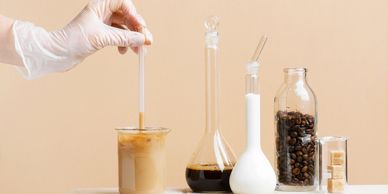
At TerraBLOOM, we love diving into the why behind the cup. From how altitude shapes acidity to why roast curves change sweetness and body, we explore the science and stories that make coffee endlessly fascinating. Expect bite-size insights, fun facts, and behind-the-scenes experiments that connect farming, roasting, and brewing—so every cup tastes even better when you know what’s happening inside it.
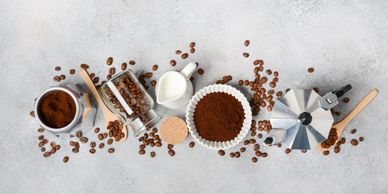
Coffee is more fun with the right tools. From clever brewing devices and precision grinders to smart scales and experimental gear we’re testing in the roastery, we love exploring gadgets that make better coffee—and better mornings. We’ll share hands-on reviews, practical tips, and honest takes on what’s worth your counter space, helping you brew with confidence and a little extra curiosity.

We share simple, approachable tips to help you brew better at home, from dialing in grind size and water ratios to choosing the right method for your taste.
The coffee industry is always evolving, and we love keeping a finger on the pulse. From trends in sourcing and sustainability to shifts in roasting, brewing, and café culture, we share thoughtful articles that offer a fresh, grounded look at what’s shaping the world of coffee today. It’s insight without the noise,designed to keep you informed, curious, and connected to the bigger picture behind the cup.
Coffee is better when it’s shared close to home. We celebrate the Lancaster County, PA coffee community,the roasters, cafés, farmers, makers, and neighbors who make this place special. From local spotlights and collaborations to events and community stories, we’re here to highlight the people and passion brewing right in our own backyard.
We’re building a coffee resource hub for anyone who loves learning and brewing better. Explore downloadable SCA charts, posters, and reference guides covering flavor, brewing ratios, roast levels, and sensory basics. Whether you’re just getting started or deep into the craft, these tools are designed to be practical, clear, and easy to keep on hand,great coffee knowledge, ready when you need it.


At Terra Bloom Coffee Roasters, we've been passionate about coffee and tea since the beginning. We started as a small family business in the 90s, and have since grown into a beloved community destination for caffeine lovers everywhere.
A TDS reader measures the percentage of dissolved coffee solids in a brewed cup. Professionals use it to evaluate extraction strength and consistency.
We have 8 locations across the city, each with its own unique character and charm. Whether you're looking for a cozy spot to work or a place to catch up with friends, we've got you covered.
We roast our coffee beans in-house, creating unique blends that are bold, smooth, and bursting with flavor. Our tea is sourced from the finest tea gardens around the world, ensuring a rich and satisfying cup every time.
Sign up for our mailing list and be the first to know about new products, events, and promotions. You'll also receive exclusive discounts and offers!
Got a question or a topic you would like us to Cover? Please send us a message!
The Belgian Syphon coffee maker is one of the most visually captivating brewing devices in the coffee world, combining science, craftsmanship, and performance into a single brewing ritual. Often considered both a brewer and a centerpiece, the syphon uses a combination of heat, vapor pressure, and gravity to extract coffee with remarkable clarity and balance. Its elegant glass chambers and open flame heat source create a brewing experience that is as engaging to watch as it is rewarding to taste.
The brewing process begins when water in the lower chamber is gently heated. As the water temperature rises, vapor pressure builds and forces the water upward into the upper chamber. Once the water reaches the top chamber, freshly ground coffee is added and stirred, allowing full immersion brewing to take place. This method ensures even saturation of the grounds and consistent extraction across the entire brew. Temperature and brew time can be carefully controlled by adjusting the heat source, giving the brewer precise influence over flavor development.
When the heat is removed, the vapor pressure in the lower chamber drops, creating a vacuum that pulls the brewed coffee back down through a filter into the lower vessel. This final step naturally clarifies the coffee, leaving spent grounds behind and producing a clean, aromatic cup with a light body and pronounced flavor detail. The result is a brew that highlights delicate notes, floral aromatics, and subtle sweetness that might be muted by other brewing methods.
Professionals value Belgian Syphon brewers not only for the exceptional cup quality they produce, but also for the way they elevate the brewing experience. The visible movement of water and coffee captures attention, sparks conversation, and invites curiosity from customers. In cafes, tastings, and educational settings, syphon brewing serves as both a functional tool and a storytelling device, connecting people to the science and artistry behind coffee while delivering a refined and memorable cup.

A TDS reader, or Total Dissolved Solids meter, is a precision tool used to measure how much soluble material from coffee grounds has been extracted into a brewed cup. The reading represents the percentage of dissolved coffee solids present in the liquid, offering an objective way to evaluate brew strength. Rather than relying only on taste, professionals use TDS measurements to quantify what is happening during extraction and ensure consistency from cup to cup.
To use a TDS reader, a brewer first prepares coffee using a known recipe and brew ratio. Once brewing is complete, a small sample of the coffee is placed on the reader’s sensor or in a testing well, depending on the device. Within seconds, the meter displays a percentage that reflects how concentrated the brew is. This data allows professionals to compare different brews, adjust grind size or brew time, and confirm whether a recipe is producing the intended strength.
When TDS data is combined with brew ratio information, it becomes possible to calculate extraction yield, which describes how much of the coffee’s soluble material has been removed from the grounds. This helps identify whether a coffee is under extracted, over extracted, or within an ideal range. Roasters, baristas, and trainers use this information to refine recipes, troubleshoot inconsistencies, and better understand how different coffees respond to changes in brewing variables.
TDS meters are widely used in quality control programs, professional training environments, and cupping labs where consistency and repeatability are critical. By pairing sensory evaluation with measurable data, these tools help bridge the gap between taste and technique. For coffee professionals, a TDS reader provides a reliable foundation for decision making, allowing them to improve clarity, balance, and overall quality in every cup they serve.

A coffee roast level analyzer is a specialized tool designed to measure how dark or light a coffee has been roasted by analyzing the physical properties of whole beans or ground coffee. Unlike traditional roast logging tools used during roasting, these analyzers evaluate the finished coffee itself. They provide objective data that helps roasters, buyers, and quality teams understand roast development after the roast is complete.
These devices typically work by shining controlled light onto the surface of the coffee and measuring how much light is absorbed or reflected. The results are converted into numerical roast level values that correspond to light, medium, or dark roast ranges. Measurements can be taken from whole beans or from ground coffee, with ground samples often providing greater consistency by reducing surface variation. This allows professionals to compare roasts accurately across batches, origins, and roast styles.
Roasters use roast level analyzers to ensure consistency from batch to batch, especially when producing coffees meant to match a specific flavor profile or customer expectation. By comparing roast level readings, teams can confirm that a coffee labeled as medium or dark truly falls within their defined standards. These tools are also useful when sharing data between roasting facilities, quality teams, and wholesale partners, creating a common reference point beyond visual inspection alone.
Roast level analyzers also play an important role in quality control and product development. They help identify unintended variation, such as a batch drifting darker over time or inconsistencies between sample roasting and production roasting. When paired with sensory evaluation, roast level data helps professionals understand how roast intensity influences flavor, body, bitterness, and aroma. For quality focused coffee operations, these analyzers provide a reliable bridge between appearance, data, and taste, supporting clearer communication and more intentional roasting decisions.

An espresso machine is a precision brewing system designed to extract coffee by forcing hot water through finely ground coffee at high pressure. This method produces a concentrated beverage with intense flavor, rich aroma, and a distinctive layer of crema on top. Espresso brewing is unique because it relies on a carefully balanced combination of temperature, pressure, grind size, dose, and time, all working together within a very short extraction window.
Inside the machine, water is heated using a boiler system, which may be a single boiler, dual boiler, or heat exchanger depending on the design. A pump then generates the pressure needed to push water through the coffee puck, typically around nine bars of pressure. The coffee grounds are packed tightly into a portafilter, forming a compact puck that resists the flow of water. As hot water passes through this puck, soluble compounds, oils, and gases are rapidly extracted, creating a dense and flavorful shot in roughly twenty five to thirty seconds.
Modern espresso machines offer baristas a high level of control over the brewing process. Temperature stability ensures consistent extraction, while adjustable pressure and flow control allow baristas to influence how water moves through the coffee. By changing these variables, it is possible to highlight sweetness, soften acidity, increase body, or reduce bitterness. This level of control makes espresso machines both powerful and demanding tools, requiring skill, attention, and practice to use effectively.
Beyond straight espresso, these machines are also designed to produce steam for milk texturing, enabling drinks like cappuccinos, lattes, and flat whites.
Steam pressure and wand design play a major role in creating smooth, silky milk that complements espresso rather than overpowering it. In professional settings, espresso machines serve as the foundation of the coffee program, supporting speed, consistency, and quality. When properly dialed in and maintained, they allow baristas to deliver repeatable, high quality results while expressing the unique characteristics of each coffee they serve.
Coffee grinders play one of the most critical roles in determining the final flavor of a brewed cup. No matter how high quality the coffee or how advanced the brewing equipment, inconsistent grinding can lead to uneven extraction and muted flavors. A grinder’s primary job is to reduce coffee beans into particles of a consistent size so that water can extract flavor evenly during brewing.
Burr grinders achieve this by crushing coffee beans between two precisely engineered surfaces called burrs. Unlike blade grinders, which chop beans randomly and create a wide range of particle sizes, burr grinders produce far more uniform results. This consistency allows for predictable extraction, helping bring out sweetness, balance, and clarity in the cup. For both home brewers and professionals, burr grinders are considered essential tools for quality focused coffee preparation.
Flat burr grinders use two parallel burrs that grind coffee into particles of a consistent size distribution. They are commonly found in espresso focused environments because they excel at producing uniform grinds required for high pressure brewing. This uniformity helps prevent channeling in espresso and supports stable extraction. Flat burr grinders are often favored in cafes where precision and repeatability are priorities.
Conical burr grinders use a cone shaped inner burr that rotates inside a stationary outer burr. This design allows for a slightly wider range of particle sizes, which many brewers find beneficial for manual brewing methods such as pour over or French press. Conical burr grinders are often quieter and generate less heat, making them popular for home use and multi purpose setups. Their versatility allows a single grinder to perform well across multiple brewing styles.
High quality burr grinders provide precise adjustment mechanisms that allow users to fine tune grind size for different coffees and brewing methods. This control leads to even extraction, improved flavor clarity, and consistent results from cup to cup. For anyone serious about coffee, a reliable burr grinder is not just an accessory but a foundational piece of equipment that directly shapes how coffee tastes and performs across every brew.
Brewing great drip or pour over coffee is part science, part craft, and part curiosity. The good news is you do not need fancy gear or years of experience to make a delicious cup. What you do need is an understanding of a few key variables and a willingness to experiment. Think of brewing coffee less like following a strict recipe and more like learning how your favorite ingredients behave together.
Water temperature plays a major role in how coffee extracts. Most coffees brew best with water between about 195 and 205 degrees Fahrenheit. Water that is too cool will struggle to pull out enough flavor, often resulting in sour or thin coffee. Water that is too hot can extract bitter compounds too aggressively. If you do not have a thermometer, bringing water just off a boil and letting it rest briefly is usually a good starting point.
Grind size is another critical factor. For drip and pour over brewing, a medium to medium coarse grind is typically ideal. If the grind is too fine, water moves too slowly through the coffee and extracts too much, leading to bitterness. If the grind is too coarse, water passes too quickly and leaves flavor behind. Adjusting grind size is one of the most powerful ways to improve your cup, and small changes can make a noticeable difference.
Brew time works hand in hand with grind size. Most pour over brews take between two and four minutes, depending on the method and dose. Shorter brew times tend to highlight acidity and brightness, while longer brew times can increase body and depth. If your coffee tastes sharp or hollow, a longer brew or slightly finer grind may help. If it tastes heavy or harsh, shortening the brew or coarsening the grind can bring balance back.
Coffee to water ratio is where consistency begins. A common starting point is one gram of coffee for every fifteen to seventeen grams of water. Stronger ratios emphasize body and intensity, while lighter ratios highlight clarity and nuance. There is no single perfect ratio, only the one that tastes best to you. Measuring your coffee and water helps remove guesswork and makes it easier to repeat a cup you love.
This is where Total Dissolved Solids, or TDS, enters the conversation. TDS measures how much coffee material has dissolved into your brewed cup. While you do not need a meter to enjoy coffee, TDS can be a helpful learning tool. It allows you to connect what you taste with what is happening during extraction. When paired with brew ratio, TDS helps identify whether a coffee is under extracted, over extracted, or right in a sweet spot that balances flavor, strength, and clarity.
Most importantly, brewing coffee should feel enjoyable, not stressful. Chasing the perfect cup is part of the fun, but perfection is not the goal. Curiosity is. Each coffee behaves differently, and every brew teaches you something new. By paying attention to temperature, grind size, time, and ratio, and by trusting your taste along the way, you get closer to a cup that feels just right. And when you do, that cup is perfect, at least for that moment.
Lets break it all down


Join the Terra Bloom Founders Club and be part of our early journey. Get first access to new coffees, special pricing, and a front-row seat as we grow—one small-batch roast at a time.